The Norwegian Institute for Nature Research (NINA) is recruiting up to four researchers or senior researchers within Arctic ecology and environmental social sciences. The positions are within NINA’s Department for Arctic and Coastal Ecology and located in Tromsø (at the Fram Centre for High North Research).
You can find more information and how to apply here.
Last week, on October 6-8, Mariana and Isabel visited Anne in Gothenburg to work on the resubmission of a funding application to the Marie Skłodowska-Curie Actions Doctoral Networks 2025 call. This ambitious grant would fund a cohort of 14 doctoral candidates to work on borealization-related research. In addition to many NordBorN researchers this grant also involves the participation of many non-academic partners.
Who thought writing a grant application could be fun? 😉
The composition of tundra plant communities is rapidly changing due to climate change. The potential encroachment of boreal species, from warmer, southern latitudes, is a conservation concern. Using the ITEX+ database, in a paper recently published in Ecology Letters Mariana García Criado and collaborators synthesized data from 32 study areas across the Arctic, including 287 vascular plant species and 1,137 plots, resurveyed between 1981 and 2023.
The aim of the study was to (i) quantify the borealization of tundra plant communities, (ii) assess the biogeographical, climatic and local drivers of borealization, and (iii) identify species contributing to borealization and their associated traits.
They found that around half of the surveyed plots experienced borealization, understood as the increase in occurrence and abundance of boreal species or species present on the boreal-tundra boundary. Borealization was greater in Eurasia, closer to the treeline, at higher elevations, in warmer and wetter regions, where climate change was limited, and where initial boreal abundance was lower. Boreal colonizer species were generally short-statured, and more often shrubs and graminoids.
The findings of this study indicate that tundra borealization is mainly driven by the spread of boreal-low Arctic tundra species, which are already present in tundra landscapes. These changes in plant community composition can have cascading impacts on land-atmosphere interactions, trophic dynamics and Indigenous and local livelihoods.
Reference: García Criado, M., Barrio, I.C., Speed, J.D.M., Bjorkman, A.D., Elmendorf, S.C., Myers-Smith, I.H., Aerts, R., Alatalo, J.M., Betway-May, K.R., Björk, R.G., Björkman, M.P., Blok, D., Cooper, E.J., Cornelissen, J.H.C., Gould, W.A., Gya, R., Henry, G.H.R., Hermanutz, L., Hollister, R.D., Jägerbrand, A.K., Jónsdóttir, I.S., Kaarlejärvi, E., Khitun, O., Lang, S.I., Macek, P., May, J.L., Michelsen, A., Normand, S., Olsen, S.L., Post, E., Rinnan, R., Schmidt, N.M., Sjogersten, S., Tolvanen, A., Töpper, J.P., Trant, A., Vandvik, V., Vowles, T. (2025) Borealisation of plant communities in the Arctic is driven by Boreal-Tundra species. Ecology Letters. https://doi.org/10.1111/ele.70209
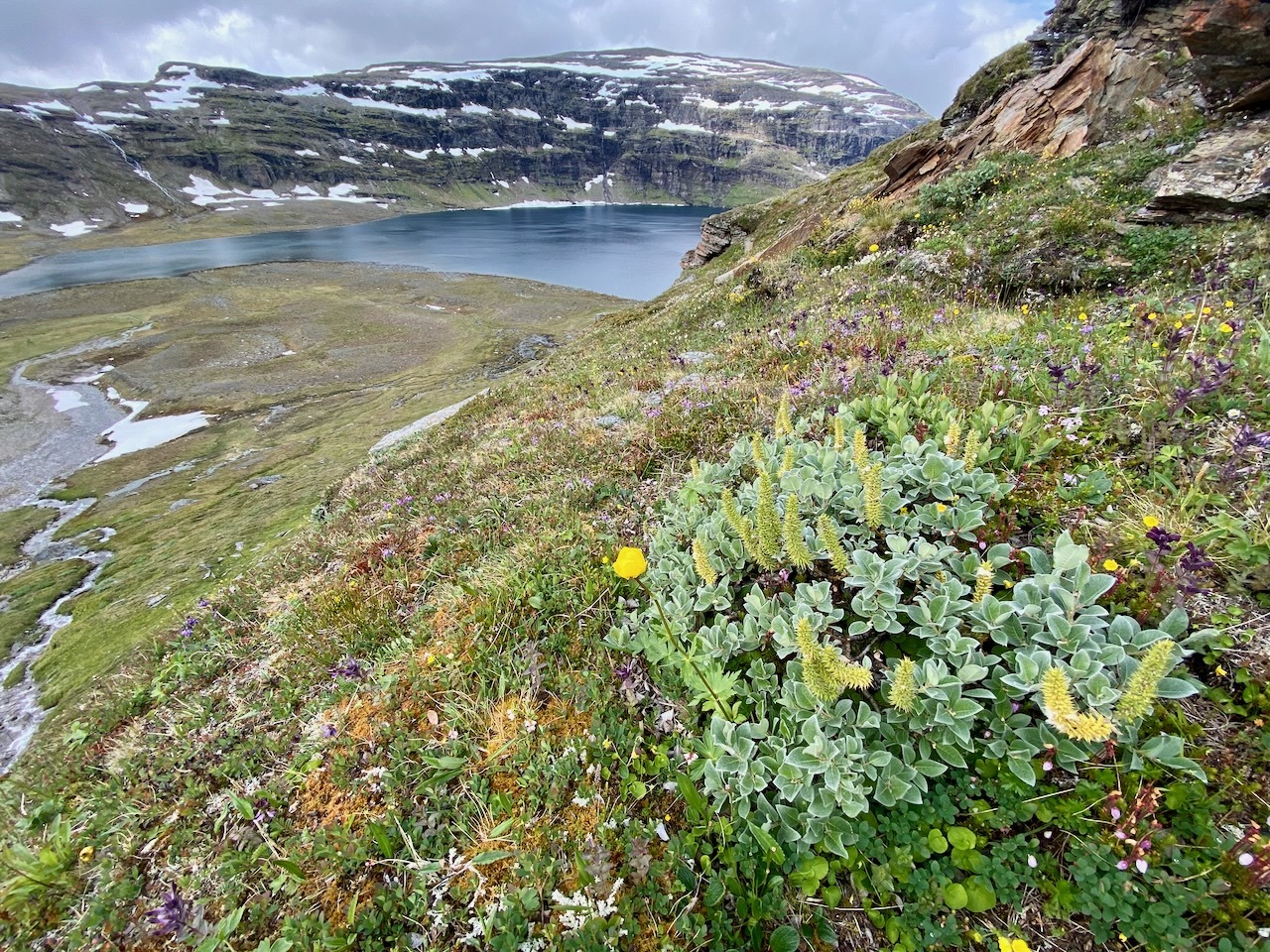
The top picture shows a woolly willow (Salix lanata) growing in Latnjajaure, Sweden (credit Anne Bjorkman)