Herbivore decline switches a high Arctic plant community from top-down to bottom-up control

This study explores how a tundra plant community at Zackenberg in NE Greenland is influenced by both grazing animals and climate warming. The Arctic is a nutrient‑poor environment, so plants are strongly affected by changes in temperature and by herbivores such as muskoxen, which feed heavily on vegetation. As the Arctic warms, plant growth is increasing, but at the same time the numbers and movements of large grazing animals are changing. Understanding how these two forces interact is important for predicting future ecosystem changes.

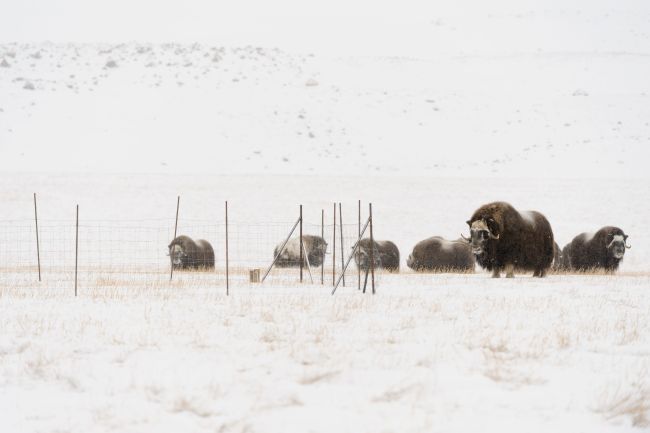
To investigate this, we conducted a 13‑year experiment in a wet Arctic fen, where we fenced off small areas to exclude muskoxen while leaving nearby areas open to grazing and trampling. Initially, the effects of excluding muskoxen were clear. After only five years, fenced areas held much more plant biomass and nitrogen, indicating that muskox grazing and trampling limit vegetation growth.

Over the longer term, however, these differences faded. Muskox numbers in the region declined during the study, reducing grazing pressure even in unfenced areas. Hence, 13 years after the establishment of the experiment, plant biomass and nitrogen pools had increased both inside and outside the fenced areas, and the treatment effect was no longer evident.

The declining muskox population at Zackenberg reduces its influence on the tundra vegetation, allowing climate warming to drive widespread increases in plant growth. These changes are likely to affect how nutrients and energy move through Arctic ecosystems, with possible knock-on effects in freshwater and coastal ecosystems.

Reference: Brockmann, F. K., Michelsen, A., Stewart, L., van Beest, F. M., Hansson, S. V., & Schmidt, N. M. (2026). Herbivore decline switches a high Arctic plant community from top-down to bottom-up control. Journal of Ecology, 114, e70308. https://doi.org/10.1111/1365-2745.70308


Text: Niels Martin Schmidt, Aarhus University / Picture: Muskox exclosures at Zackenberg, Lars Holst Hansen.
Borealization of tundra ecosystems with climate and land-use change

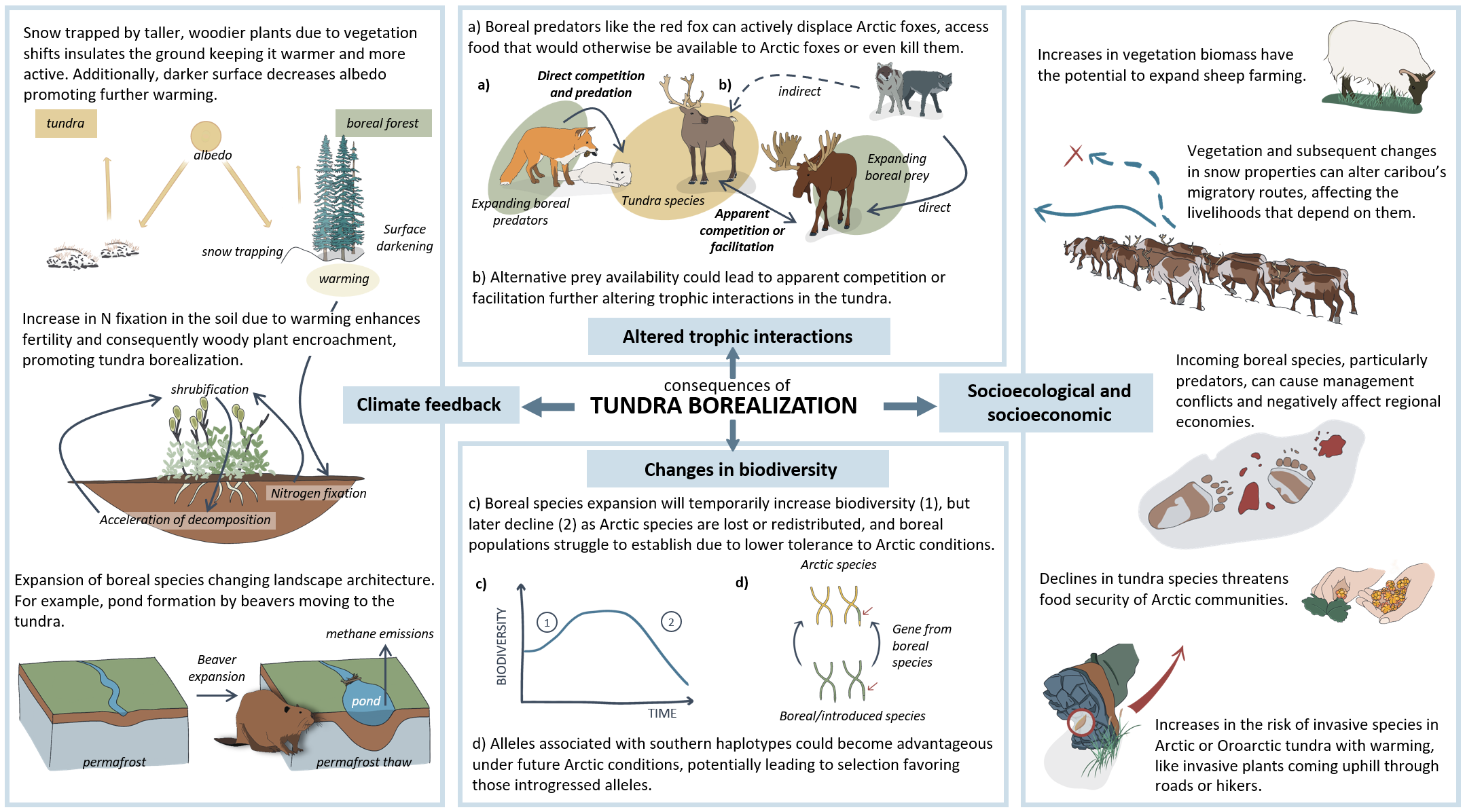
We are happy to start the new year with the publication of the first topical review from the Nordic Borealization Network, where we introduce the concept of tundra borealization to describe northward and upward shifts of boreal species into tundra ecosystems — a key yet still underrecognized dimension of climate-driven ecological change. 

In this synthesis, we: 

  • clarify how borealization is defined across disciplines and environments 
  • summarise evidence of plant and animal community changes in tundra systems 
  • review methods for quantifying borealization 
  • discuss how climate and land-use change drive species reorganization 

By bridging ecology, biogeography, climate science, and socio-ecological research, this work advances theoretical understanding of ecosystem responses to global environmental change. Given the implications for biodiversity, ecosystem functioning, climate feedbacks, and Arctic livelihoods, we hope it will support both research and adaptation efforts. 

Reference: Verdonen, M., Barrio, I. C., Barbero-Palacios, L., López-Blanco, E., Speed, J. D. M., Defourneaux, M., García Criado, M., Moullec, M. le, Mellard, J. P., Salazar, A., Bakke Westergaard, K., Guðmundsson, J., Schmidt, N. M., Sigurdsson, B. D., Austrheim, G., Bjorkman, A. D., Björnsdóttir, K., Jepsen, J. U., Pagneux, E. P., Trascau, B.M., Williamson, D.R., Aradóttir, Á.L., Barry, A., Bernard, T., Koivisto, E., Kumpula, T., Villoslada, M., Myers-Smith, I. H. (2026). Borealization of tundra ecosystems with climate and land-use change. Environmental Research Letters21(1), 013002. https://doi.org/10.1088/1748-9326/ae2e18 

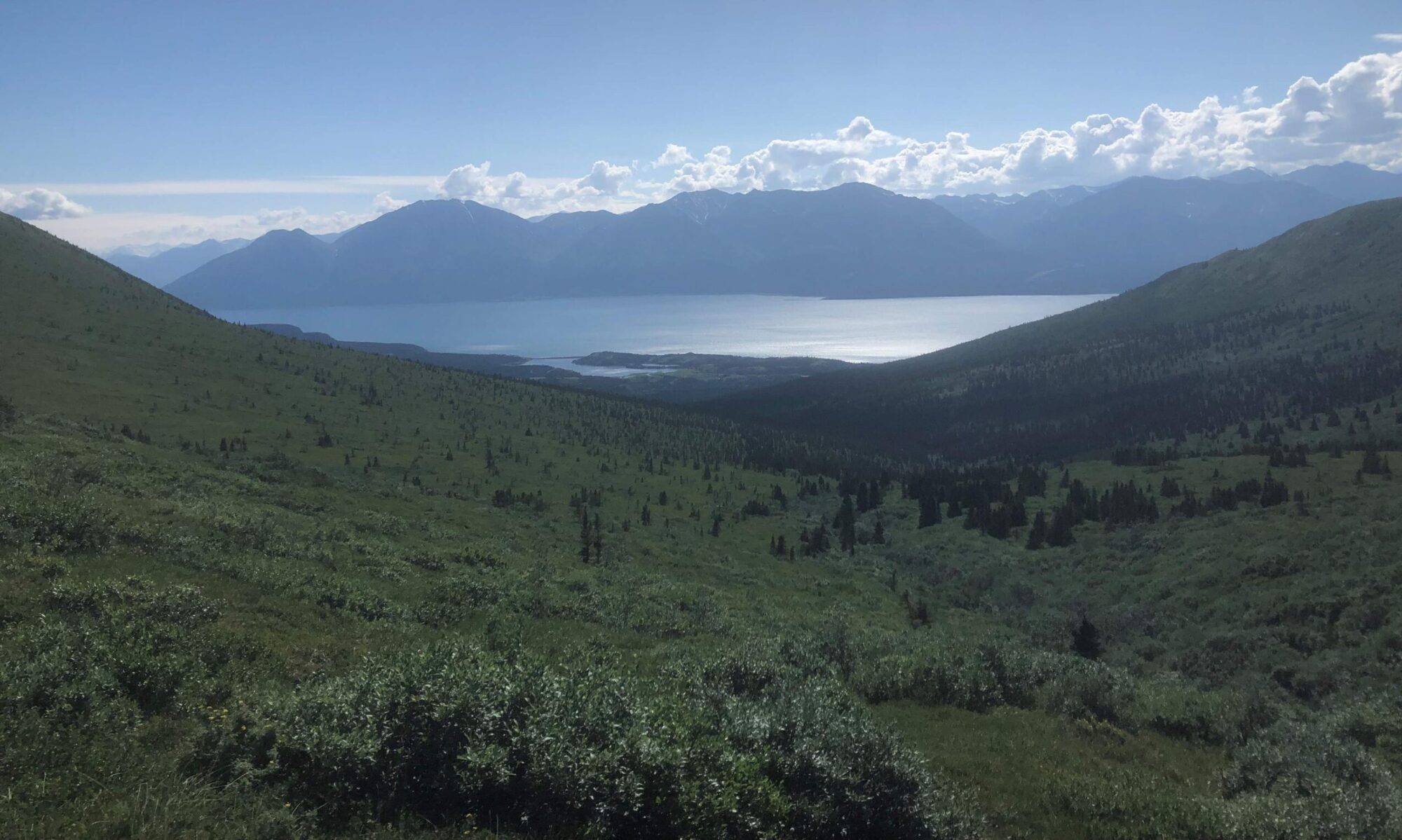
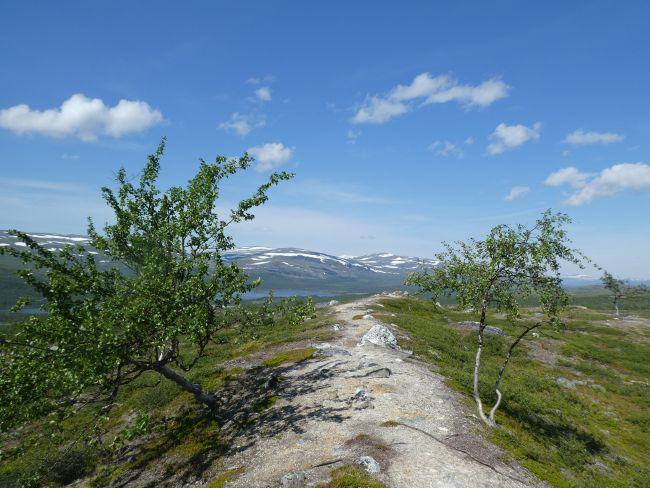
Photo: Birch trees growing on a ridge in Kilpisjärvi, Finland. Credit: Mariana García Criado

New paper on potential new alien plants across the Arctic

Invasive species are one of today’s main environmental challenges, implicated in biodiversity loss and causing huge ecological and economic costs. So far, the remote and cold Arctic tundra has been spared the worst impacts of invasive plants. However, increasing human activity and a warming climate together increase the chances for non-native plant introductions, and establishment. To facilitate monitoring and management of this challenge, NordBorN researchers including Kristine Westergaard and James Speed at the Norwegian University of Science and Technology, have carried out an horizon scan for potential non-native plants across the terrestrial Arctic. 

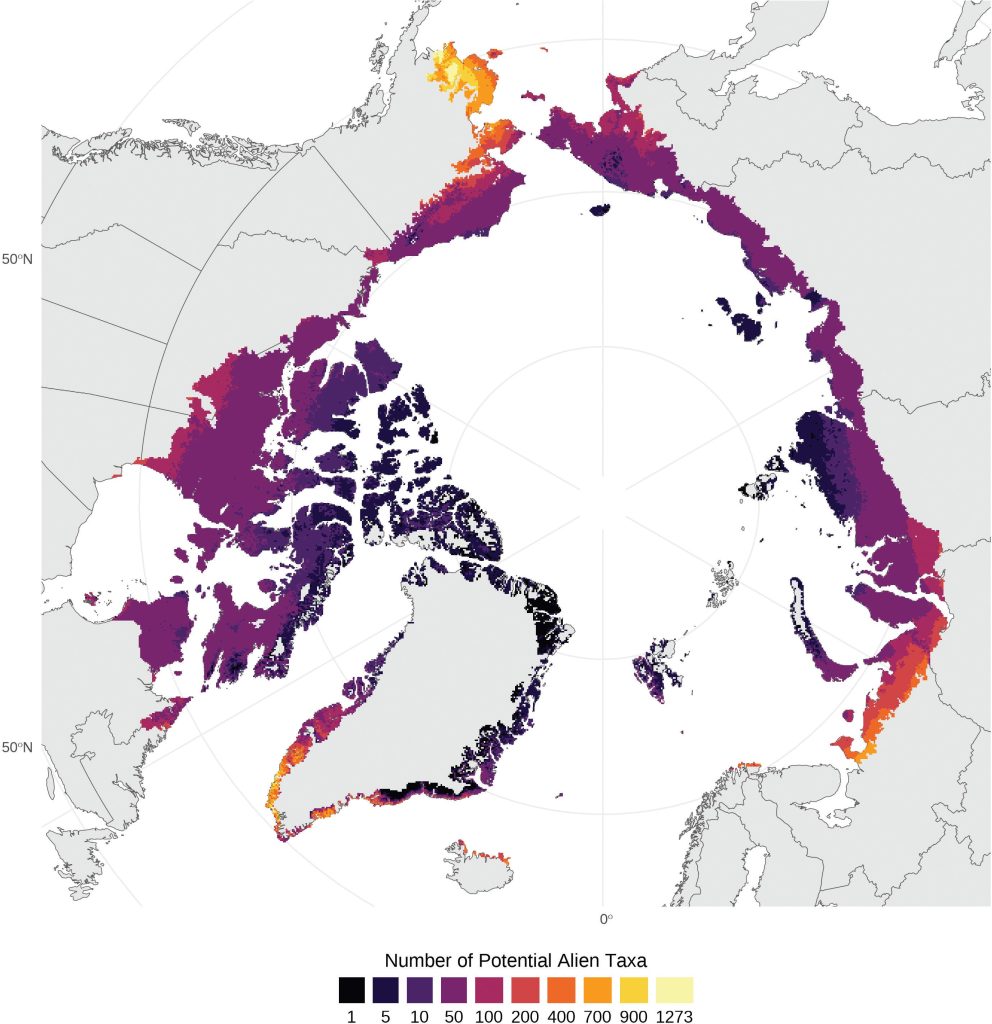
Starting with a list of globally invasive plants, they identified potential alien species as those with a climate overlap with today’s Arctic climate. They identified a total of 2554 new alien plant species that could potentially survive in the climatic conditions in the Arctic tundra. Some regions are identified as potential hotspots including western Alaska, southwestern and southeastern Greenland, northern Iceland, Fennoscandia, and Kanin–Pechora. The species that could potentially establish in the Arctic are widely distributed across the world. However, species with high latitude distributions (e.g. boreal species) had a higher likelihood and degree of climate overlap with the Arctic. The close geographical connection between the Arctic and boreal regions makes this area a key source for non-native species introductions to the Arctic. 

The number of potential new alien vascular plant species across the Arctic

The data-driven horizon scanning approach that is developed in this paper produces regionally-specific lists of risk species and source regions. These can help develop biosecurity, monitoring and rapid response measures, contributing to preserving the ecological integrity of the Arctic tundra into the future. 

Publication: Ulsted, T.H., Westergaard, K.B., Dawson, W., & Speed, J.D.M. (2025). Horizon scanning of potential new alien vascular plant species and their climatic niche space across the Arctic. NeoBiota104, 1-26. https://doi.org/10.3897/neobiota.104.165054

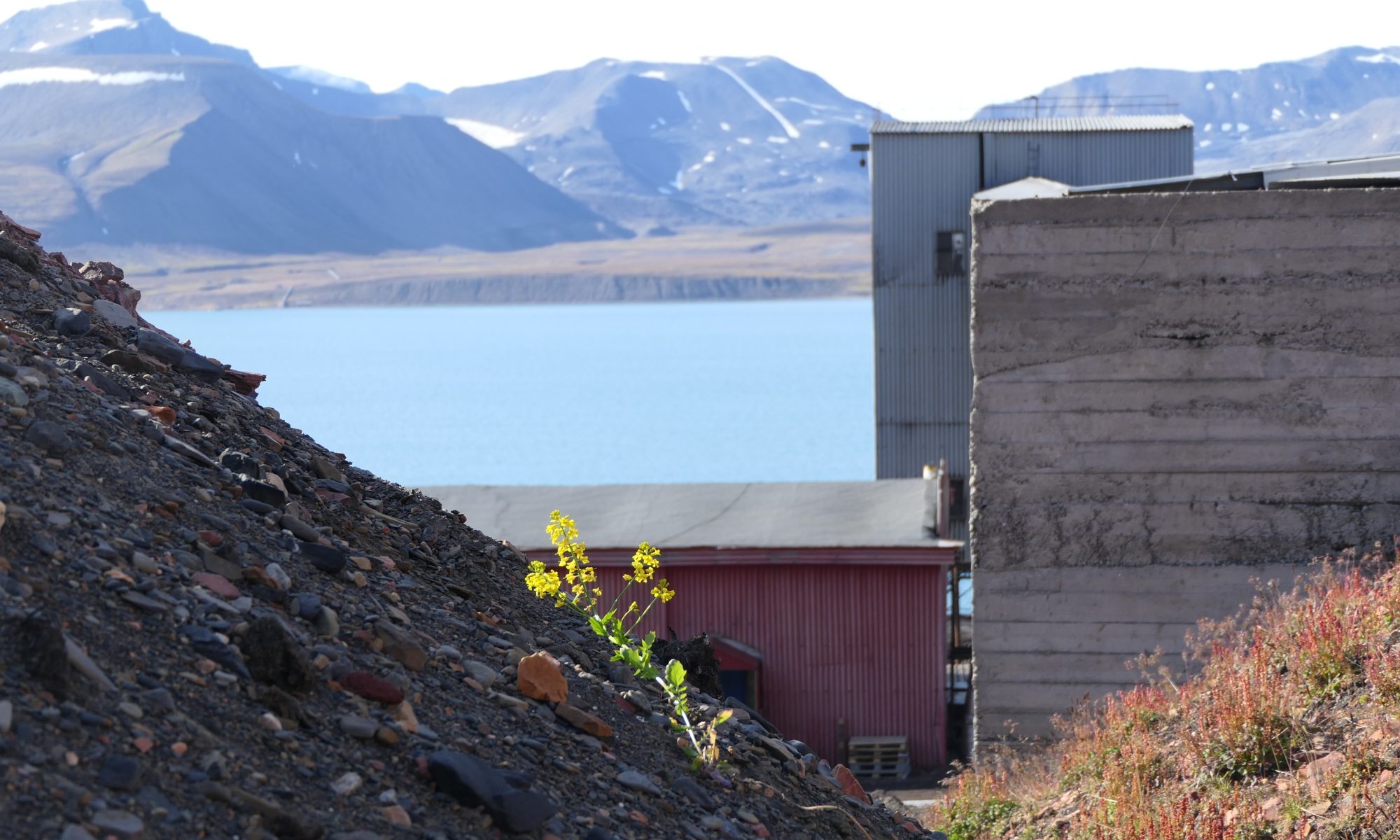
Photo: Alien Barbarea vulgaris growing on very disturbed substrates in Barentsburg, Svalbard. (Kristine Westergaard)